How to know if a surfboard is okay?

Indice
Short answer:
To find out if a surfboard is okay, you need to evaluate both its fitness and functionality for your level:
Physical Inspection:Pass the hand and lookCracks(If the nail gets hooked, water enters)Deep dentsorsoft areas(delamination). A heavy or yellow-spotted board can indicate water leaks into the core.
Performance (the 80/20 rule):The right table is the one that allows you to take the80% of the waves that row. If you fall constantly or have a hard time rowing, the table haslittle volumefor you If you float a lot but you can’t turn, it’s too big.
In short:A “good” table is one that is structurally healthy (tight and solid) and whose volume facilitates paddling and stability.
It may interest you
Choosing the right table or evaluating if you have still functional can be, honestly, a headache. It has happened to all of us: you see a bright and beautiful board in a store or on a second-hand website, you fall in love with the shape, but when you put it in the water you feel that you sink like a stone or that it does not turn even if you beg it.
Surfing is a sport where equipment is 50% of the equation. If your table is not right—either because of its fitness or because it is not suitable for your level—your progression will stagnate. It doesn’t matter how strong you remes or the desire you put into it; If the tool fails, the architect cannot work.
In this article we are going to delve into the technical and practical aspects to identify if a table is worth it, when it is time to change it and how to detect those invisible damage that can ruin your session.

1. Physical table review: What your eyes (and fingers) should look for
Before we talk about performance, let’s talk about structural health. If you are going to buy a second-hand board or want to know if your old battle partner is still alive, you have to do a forensic inspection. It is not enough to look at her from afar; You have to touch it.
Visible damage: cracks and dents
The first is the obvious. SearchCracksin fiberglass. A simple ruler is the nail test: run the nail gently over the crack. If the nail catches, it means that the crack is deep and has broken the tightness. If water enters the core (foam), the table will start to weigh more, it will rot inside and lose buoyancy.
ThedentsThey are normal in the “deck” (the top where you step), but if they are very deep or are in the “bottom” (the bottom part), they can affect the flow of water (hydrodynamics) and make the table slower.
Status of the Deck and Songs: Silent Enemies
This is where you need tactile experience.
Soft spots:Press with your thumbs along the entire board, especially near the soul (the central wood line) and in the area where you put your feet. If you notice that the fiber sinks and separates from the foam as if it were an air bubble, you have a delamination. This is a “terminal disease” for the table.
Excessive repairs:A table with many repairs in the edges or in the keel area can have its structural integrity compromised. If the repair is poorly done and has absorbed water, the performance will plummet.
If you have doubts about the state of your material or are thinking of buying your first board, sometimes it is best to approach a<a href=”https://kaizensurfschool.com/“>Surf School Tenerife</a>of trust. There, the instructors not only teach you to surf, but they tend to be experts in material and can honestly advise you on whether that second-hand board is a bargain or garbage.
2. Volume and measurements: fun math
A table can be physically flawless, new package, and yet “not well” for you. This is the most common mistake: buying for aesthetics and not for physics.
The volume: your best friend
Volume (measured in liters) is the amount of space that the table occupies. More volume equals more buoyancy.
Beginners:They need tables with a lot of volume. We are talking about long boards (7 to 9 feet), wide and thick. This gives you stability (like a raft) and makes paddling easier. If you are starting and grab a board with a few liters, you will spend the session rowing without moving from the site.
intermediate/advanced:As you improve, you can sacrifice volume to gain maneuverability. A table with less volume sinks deeper, allowing the edge to be nailed in the water to make fast and radical turns (cutbacks, snaps).
Ideal size according to your height
There is a general rule that works very well:
To start:The table should be considerably higher than you (at least one head or more). This ensures a long waterline to maintain speed.
For advanced:The board can be equal to or shorter than your height to fit into the wave hole and maneuver in tight spaces.
in our Surf lessons in Tenerife for beginnersWe always start with high volume boards (softboards). We see daily how students who tried to learn on their own with short boards (because they “is more cool”) arrive frustrated, and as soon as we give them the table with the right volume, their face changes and they start catching waves in a matter of minutes.
3. Water yield: the definitive test
This is where theory meets reality. How do you know if the table workswith youabove?
The rule of 80/20 (you in the table)
This is an excellent metric to self-assess.If you stand up in 8 out of 10 wavesWhat rows and you are able to follow the wall of the wave (not just go straight in the foam), that board is good for your current level.
However, if you miss the “take off” a lot, you constantly fall when trying to stand up or feel that the board trembles under your feet, it is a clear sign that the table istoo smallfor you On the contrary, if you get on your feet easy but you are not able to turn it even a little, perhaps it is time to drop in size.
buoyancy and speed
If you have a hard time rowing or not catching waves:You need more volume. Surfing is 90% rowing. If your board sinks when paddling, you generate resistance (drag) and the wave passes you under.
If you feel very stable but have a hard time maneuvering:The table is too big. This is good to learn, but bad to evolve into turns.
Curves (rocker): the personality of the table
The “rocker” is the curvature of the profile view table (like a banana).
Flat Rocker:The table is straighter. This gives a lot of speed and facilitates paddling and gliding in flabby waves. It is ideal for beginners or for small waves.
Pronounced rocker (curved):The table looks more like a banana. This makes it slower when paddling, but it allows it to fit into hollow and vertical waves without nailing the tip (nose). It is essential for advanced maneuvers.
To really understand how Rocker affects your surf, nothing better than an immersive experience. In a<a href=”https://kaizensurfschool.es/surfcamp-en-tenerife-sur/“>Surf Camp in Tenerife</a>, you have the opportunity to try different types of tables for several days in a row. That trial and error, under the supervision of experts, is the fastest way to find your “magic table”.
4. Test before buying
Never marry the first table you see. The table market is immense and each “shape” (form) behaves differently.
Comparing is key
Try different tables to understand how they behave according to your level and the type of wave. Borrow the table from a friend, rent different models at your local beach or take advantage of the days of brand testing. Understanding the difference between a “twin end” (two keels), a “thruster” (three keels) or a “longboard” is crucial to improve. There is no “best table in the world”, there is the best table for today’s conditions and your level today.
Frequently Asked Questions (FAQs)
How can I know if a surfboard is in good condition?
You should review three key points:
tightness:that does not have cracks where water enters (nail test).
Solidity:that does not have soft zones when pressing (delamination).
Weight:If it weighs much more than it should because of its size, it is likely that it has water inside it.
How to know if it is good surf?
It is considered “good surfing” when the conditions of the sea (wind, tide and bottom) create orderly waves, with a clean wall that allows the surfer to go through it and carry out maneuvers, instead of waves that close at once or are disordered by the wind.
How can I know what surfboard I need?
It depends on your weight, height and level.
Beginner:Your weight in kg + 10-15 = recommended liters. Height: +30/40 cm above your head.
Intermediate:Your weight in kg approx = liters (or a little less). Height: equal to or slightly higher than you.
How long is a surfboard?
It depends on the material and the care.
Epoxy/Softboard:They are very durable, they can withstand years of intense use.
Polyester (traditional fiber):They are more fragile. With daily use, they lose their “pop” (flexibility and response) in 1 or 2 years, and are prone to dents, although well cared for can last for decades.
Remember, the perfect table is not the most expensive or the most beautiful, it is the one that makes you come out of the water with a smile on your face. See you at the peak!
Articulos relacionados
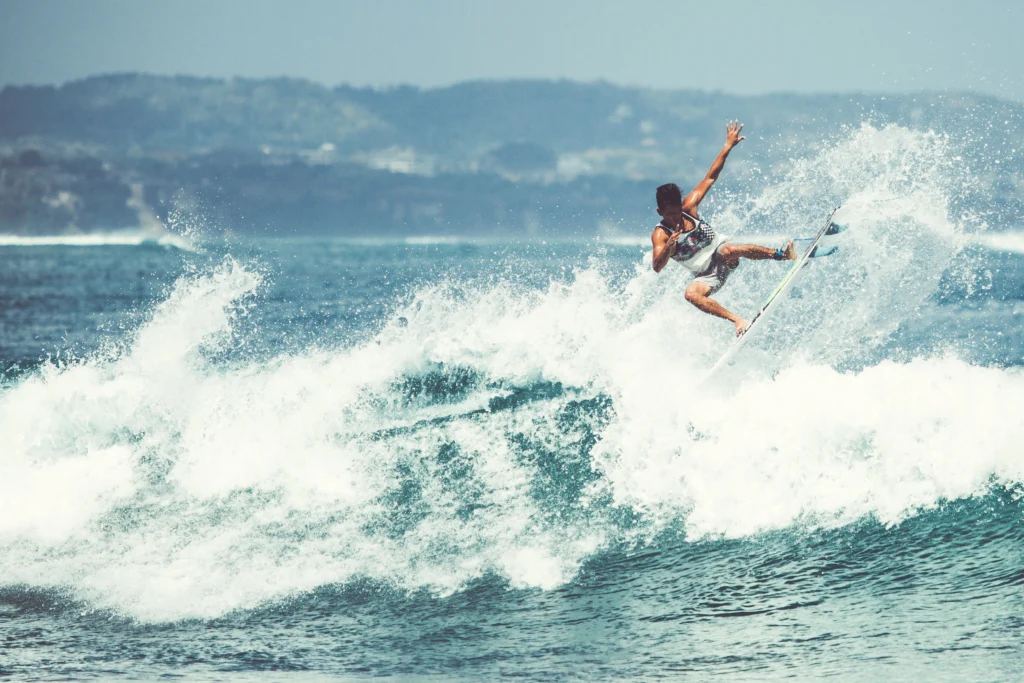
Best time of tenerife to do surf
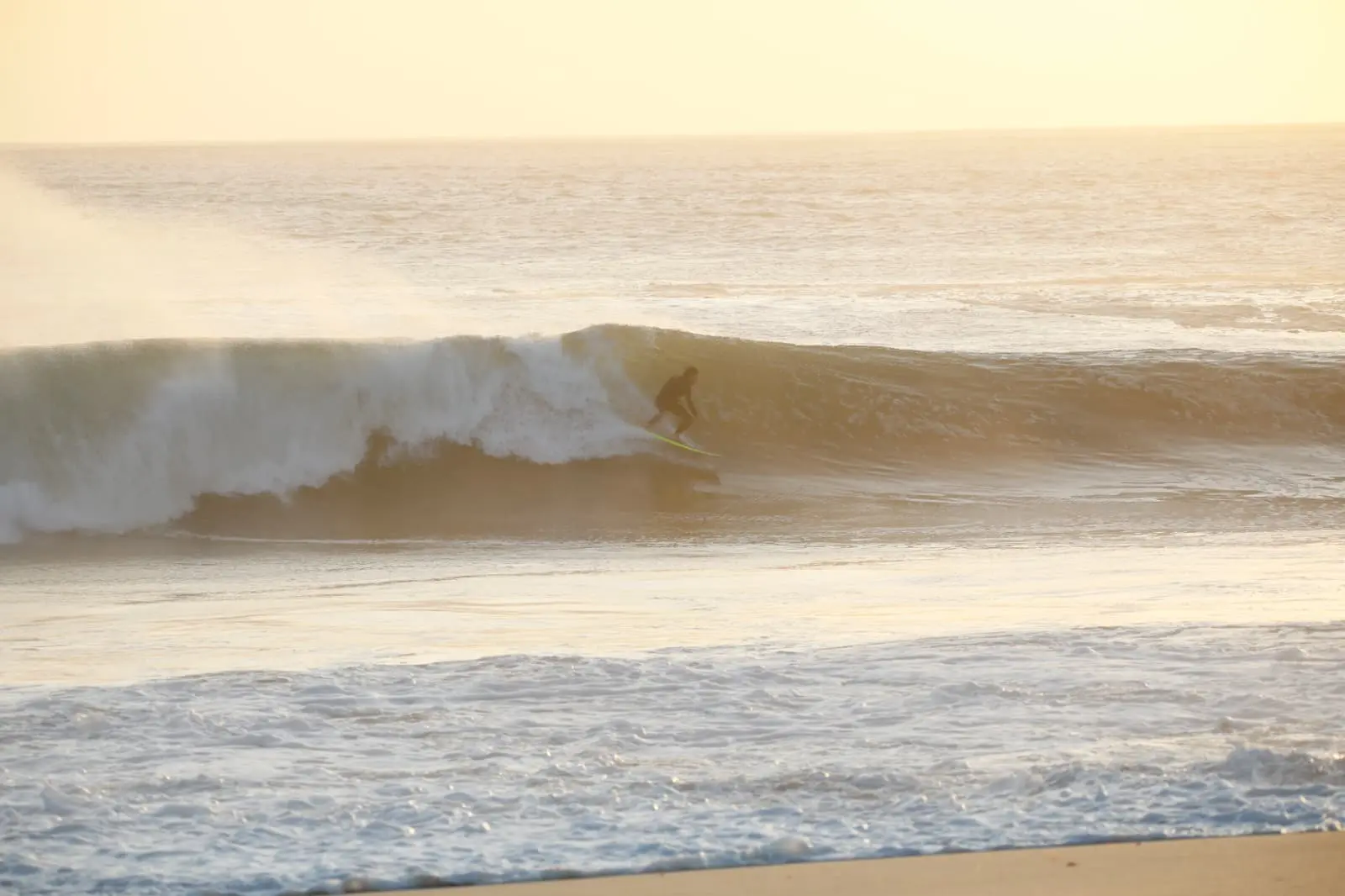
Best spots Tenerife
